
When I first listed my Long Beach property on Airbnb, I spent weeks agonizing over furniture and photography. I barely thought about amenities. I figured: bed, towels, WiFi. How hard could it be?
Within my first month, I had two guests mention in their reviews that they wished there was a hair dryer. One docked me a star on “value.” I had no idea guests filtered for that, expected that, or would rate me on it.
Three years and Superhost status later, I have a very different relationship with my amenities list. It is one of the highest-leverage things you can manage as a host, and most guides give you a generic checklist without telling you why each item matters or how guests actually think about it.
Here is the framework I use, and the specific amenities that have made the biggest difference for my listing.
TLDR: Key Takeaways
- Guests split amenities into two buckets: baseline expectations and delightful extras. Missing a baseline kills your reviews.
- Airbnb’s most-searched filters include WiFi, free parking, self check-in, washer/dryer, and air conditioning. These are table stakes.
- Small, cheap items (hair dryer, iron, coffee setup) generate an outsized share of complaints when missing.
- The amenities that drive 5-star reviews are the ones guests did not expect but genuinely appreciated.
- Document every amenity in your house manual so guests know what is available and where to find it.
The Baseline Amenities Guests Expect Without Asking
There is a category of amenities that guests no longer view as extras. They are assumptions. When these are missing, guests feel misled, even if you never promised them. These are the items that generate the most avoidable negative feedback.
WiFi is non-negotiable. Guests expect it to work at video-call quality, not just load email. I now include my speed in the listing description and run a speed test screenshot to confirm. If your WiFi is slow, fix it before anything else on this list.
Air conditioning and heating. In Southern California, AC is survival. Even mild weather trips get hot rooms, and guests will mention it. If your unit lacks central AC, make sure every room has a quality window unit or portable AC, and list it clearly.
A washer and dryer. Families, long-stay guests, and anyone with kids or athletic gear will filter for this. If you have it, photograph it, list it, and put the detergent pod count in your house manual.
Free parking. This one surprises new hosts who are in urban areas. Guests will absolutely count street parking as “free parking,” but you need to be honest about permit zones, time limits, and competition for spots. I describe exactly what parking looks like so guests know before they book.
Self check-in. The pandemic normalized this completely, and now guests expect it. A lockbox works, but a smart lock is better because you can change codes between stays, issue time-limited codes, and monitor entry remotely. This is one of the few “tech” investments that pays for itself quickly.
A fully functional kitchen. “Kitchen” on Airbnb can mean a hot plate and a mini fridge. Guests who choose an Airbnb over a hotel often do so specifically to cook. I make sure my kitchens have: a working stove with all burners, an oven, a microwave, a coffee maker, a kettle, a toaster, a full set of pots and pans, plates and glasses for the max guest count, dish soap, a sponge, and paper towels. If your kitchen is limited, say so clearly in the listing.
The Small Items That Create Huge Review Problems
These items cost almost nothing but generate a disproportionate share of guest complaints when missing. Every one of these came from a guest message or a review mention I received.
Hair dryer. This is the number one amenity guests mention when it is missing. It is also one of the cheapest to provide. I keep a dedicated hair dryer in each bathroom and list it in my amenities.
Iron and ironing board. Business travelers and guests attending events will specifically look for this. A wrinkle-release spray is a nice backup if you have limited storage.
Extra towels and bed linens. Guests feel uncomfortable asking for more towels. I leave out two sets per guest from the start. It eliminates a common message and makes the space feel generous without costing much.
A phone charger or charging station. I keep a multi-port USB hub on each nightstand. Guests mention this more than almost anything in messages.
A first aid kit. Nobody talks about this one. I added a small kit after a guest messaged me at 10pm asking if I had any bandages. It costs about $8. Every listing should have one.
Basic pantry staples. I keep olive oil, salt, pepper, sugar, and a few coffee pods stocked as a welcome supply. Guests who arrive hungry and tired will immediately check the kitchen. Finding nothing there is a small letdown. Finding the basics is a small delight.
The Amenities That Actually Drive 5-Star Reviews
These are not the basics. These are the items guests specifically mention in reviews as something they loved, often because they did not expect to find them.
A well-stocked welcome basket. I put together a simple tray on the kitchen counter with: a handwritten welcome card, two water bottles, a few local snacks, and a couple of travel-size toiletries. This costs me about $12 per booking. It is mentioned in roughly one out of three of my 5-star reviews.
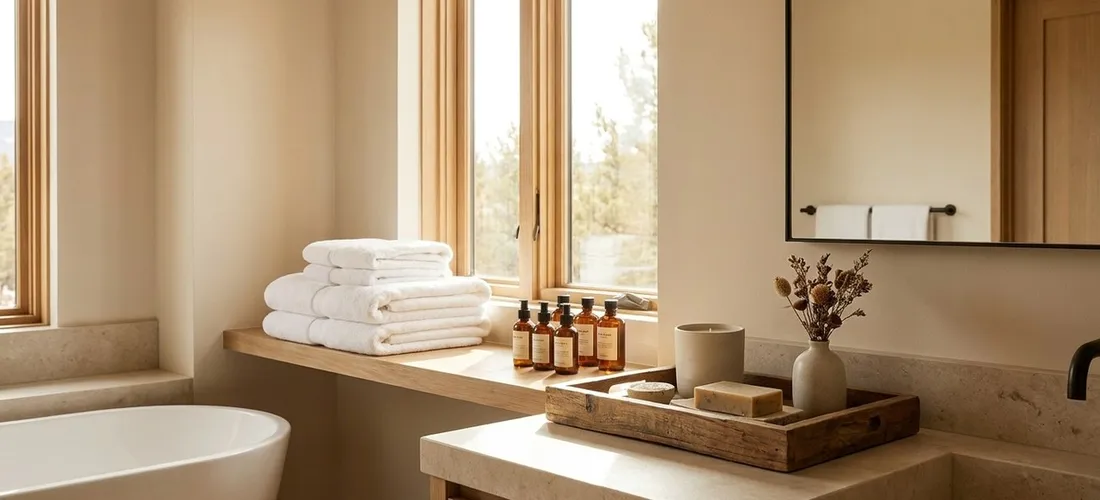
Hotel-quality toiletries. The bar soap from Costco does not photograph well and does not feel luxurious. Spending $2-3 more per stay on a matching toiletry set from a brand like Grove Collaborative or Public Goods signals that you care about the details. Guests notice.
Blackout curtains. Light sleepers, parents with young children, and guests in bright-facing rooms will sleep better and rate higher. I added blackout curtains to my bedroom after two guests mentioned light as a sleep issue, and the sleep-quality comments in my reviews improved noticeably.
A Bluetooth speaker. This is especially relevant for properties near beaches or with outdoor spaces. Guests love it, it rarely breaks, and it is easy to wipe clean between stays.
Local recommendations in written form. This is an amenity people overlook because it is not a physical object. But when a guest arrives and finds a curated list of your favorite local coffee shops, restaurants, and things to do, they feel taken care of in a way that a generic Yelp search never replicates. I include mine in my house manual, and I update it seasonally.
How to Communicate Your Amenities So Guests Actually Read Them
Having the right amenities is only half the job. Guests frequently do not notice what is available if it is not clearly communicated. This is where most hosts lose review points on items they actually provide.
First, update your Airbnb listing amenity section completely. Airbnb allows you to add a huge list of checkboxes. Most hosts leave a third of them unchecked even when the items are present. Go through the full list and check everything you have. Guests filter by these tags.
Second, photograph your amenities. If you have a workspace, show the chair and desk. If you have a coffee station, photograph it styled. If you have a washer and dryer, include a photo with the detergent products visible. This signals to guests that the item works and is stocked.
Third, reference amenities in your welcome message. When guests check in, I send a short message pointing them to the house manual and calling out two or three things they might not think to look for: “The Bluetooth speaker is on the kitchen shelf, already paired. Extra towels are in the cabinet under the bathroom sink.”
If you want a system for all of this that is already built out, the Complete Airbnb Guidebook template covers the amenity section in detail, including a page layout for local recommendations and a full kitchen inventory section guests can reference during their stay.
The Amenities Worth Investing In as You Scale
If you are looking to grow your revenue, a few amenity upgrades have a clear return on investment.
A dedicated workspace. Remote workers and digital nomads are a large and growing booking segment. A proper desk, ergonomic chair, and strong WiFi will let you add “dedicated workspace” to your listing tags and attract guests who book longer stays.
Smart home tech. A smart thermostat, smart lock, and noise monitor cover the three things that cause the most operational headaches: temperature disputes, lockouts, and neighbor complaints. All three are solved without you needing to be on-call.
EV charging. This is still an “extra” in most markets, but it is becoming a filter item quickly. If you have a dedicated parking space, adding a Level 2 charger puts you in a very small competitive category in most cities.
The amenities conversation is ultimately about one thing: delivering what guests expect, then adding one or two things they did not expect. The former protects your rating. The latter builds it.
Start with your baseline gaps, fix those first, and then layer in the small delights. That combination, done consistently, is exactly what separates a good listing from a booked-out one.